
-az-animex- Demi-chan Wa Kataritai - 03 -bd--ma... [new] -
State of the art timing analysis
with industry-hardened methods and tools.
State of the art timing analysis
with industry-hardened methods and tools.
...with industry-hardened methods and tools. T1 empowers and enables. T1 is the most frequently deployed timing tool in the automotive industry , being used for many years in hundreds of mass-production projects.
As a worldwide premiere, the ISO 26262 ASIL‑D certified T1-TARGET-SW allows safe instrumentation based timing analysis and timing supervision. In the car. In mass-production.
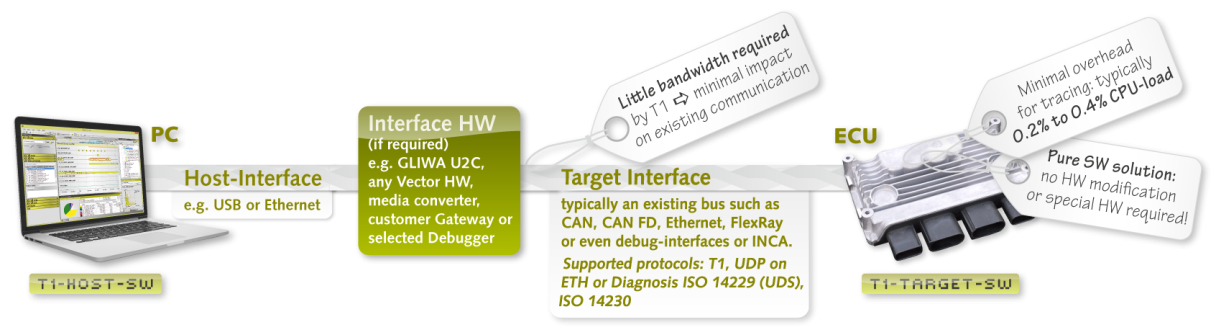
T1.timing comes with two extension options. Add-on product T1.streaming provides the possibility to stream trace data continuously — over seconds, minutes, hours or even days. Add-on product T1.posix supports POSIX operating systems such as Linux or QNX.
T1.timing comes with a modular concept and several plug-ins which are described in the following. Plug-ins can be easily enabled or disabled at compile-time using dedicated compiler switches such as T1_DISABLE_T1_CONT. To disable T1 altogether, it is sufficient to disable compiler switch T1_ENABLE which leaves the system in a state as of before the T1 integration.
The third episode of “Demi-chan wa Kataritai” focuses on the character of Kumanokouji, a shy and introverted girl who is trying to come to agreement with her own identity. As Ichiko and her companions try to help Kumanokouji share up, they find more about her past and the obstacles she experiences as a “centaur,” a creature with the superior body of a person and the bottom body of a horse. Throughout the episode, the show’s makers expertly balance comedy and heart, tackling complex issues such as self-acceptance, group pressure, and the significance of encouraging connections. The personalities’ conversations are genuine and accessible, making it straightforward to become engaged in their narratives. Technical Features The high-definition release of “Demi-chan wa Kataritai” part 3 offers a significant upgrade in areas of visual and sound standard. The HD resolution and immersive sound create an engaging viewing event, drawing viewers into the universe of the animation.
In episode 3, the personage of Kumanokouji serves as a potent symbol for the struggles of self-embrace and the value of finding helpful connections. Her narrative serves as a recollection that everyone has their own distinctive challenges and that it’s acceptable to be distinct.
Here is the rephrased text with 3 variants in spintax:
Here is the rephrased text with all words having 3 alternatives in spintax format z:
Conclusion
The latest episode of the series on Blu-ray is a entertaining addition to the series, offering a heartwarming and insightful exploration of identity, interpersonal relationships, and self-acceptance. With its intriguing characters, amusing storytelling, and exceptional technical qualities, this episode is a must-watch for audiences of the series and new viewers alike.
Interviews with Monster Girls: A Pleasant Exploration of Identity and Individual Connection The anime series “Demi-chan wa Kataritai,” also known as “Interviews with Monster Girls,” has taken the world by storm with its unique blend of comedy, heart, and introspective themes. The third episode of the series, now available on Blu-ray, continues to charm audiences with its playful yet substantial storytelling. A Brief Recap For those who may be new to the series, “Demi-chan wa Kataritai” follows the story of Ichiko Sakura, a high school girl who works part-time at a convenience store. Her life takes an intriguing turn when she meets a group of girls who are all afflicted with paranormal conditions, such as being a “demi-human” or having animal-like features. The series explores their daily lives, relationships, and challenges as they navigate the complexities of adolescence. Episode 3: A Deep Dive
Themes and Metaphor One of the remarkable aspects of “Demi-chan wa Kataritai” is its considerate exploration of subjects and symbolism. The show uses the occult elements as a analogy for the challenges and trials that people experience in their routine lives.
For POSIX-based projects, see T1.posix.
The third episode of “Demi-chan wa Kataritai” focuses on the character of Kumanokouji, a shy and introverted girl who is trying to come to agreement with her own identity. As Ichiko and her companions try to help Kumanokouji share up, they find more about her past and the obstacles she experiences as a “centaur,” a creature with the superior body of a person and the bottom body of a horse. Throughout the episode, the show’s makers expertly balance comedy and heart, tackling complex issues such as self-acceptance, group pressure, and the significance of encouraging connections. The personalities’ conversations are genuine and accessible, making it straightforward to become engaged in their narratives. Technical Features The high-definition release of “Demi-chan wa Kataritai” part 3 offers a significant upgrade in areas of visual and sound standard. The HD resolution and immersive sound create an engaging viewing event, drawing viewers into the universe of the animation.
In episode 3, the personage of Kumanokouji serves as a potent symbol for the struggles of self-embrace and the value of finding helpful connections. Her narrative serves as a recollection that everyone has their own distinctive challenges and that it’s acceptable to be distinct.
Here is the rephrased text with 3 variants in spintax: -Az-Animex- Demi-chan wa Kataritai - 03 -BD--Ma...
Here is the rephrased text with all words having 3 alternatives in spintax format z:
Conclusion
The latest episode of the series on Blu-ray is a entertaining addition to the series, offering a heartwarming and insightful exploration of identity, interpersonal relationships, and self-acceptance. With its intriguing characters, amusing storytelling, and exceptional technical qualities, this episode is a must-watch for audiences of the series and new viewers alike.
Interviews with Monster Girls: A Pleasant Exploration of Identity and Individual Connection The anime series “Demi-chan wa Kataritai,” also known as “Interviews with Monster Girls,” has taken the world by storm with its unique blend of comedy, heart, and introspective themes. The third episode of the series, now available on Blu-ray, continues to charm audiences with its playful yet substantial storytelling. A Brief Recap For those who may be new to the series, “Demi-chan wa Kataritai” follows the story of Ichiko Sakura, a high school girl who works part-time at a convenience store. Her life takes an intriguing turn when she meets a group of girls who are all afflicted with paranormal conditions, such as being a “demi-human” or having animal-like features. The series explores their daily lives, relationships, and challenges as they navigate the complexities of adolescence. Episode 3: A Deep Dive The third episode of “Demi-chan wa Kataritai” focuses
Themes and Metaphor One of the remarkable aspects of “Demi-chan wa Kataritai” is its considerate exploration of subjects and symbolism. The show uses the occult elements as a analogy for the challenges and trials that people experience in their routine lives.
| Vendor | Operating System |
|---|---|
| Customer | Any in-house OS** |
| Customer | No OS - scheduling loop plus interrupts** |
| Elektrobit | EB tresos AutoCore OS |
| Elektrobit | EB tresos Safety OS |
| ETAS | RTA-OS |
| GLIWA | gliwOS |
| HighTec | PXROS-HR |
| Hyundai AutoEver | Mobilgene |
| KPIT Cummins | KPIT** |
| Siemens | Capital VSTAR OS |
| Micriμm | μC/OS-II** |
| Vector | MICROSAR-OS |
| Amazon Web Services | FreeRTOS** |
| WITTENSTEIN high integrity systems | SafeRTOS** |
| Qorix | Qorix Classic |
| Embedded Office | Flexible Safety RTOS |
(**) T1 OS adaptation package T1-ADAPT-OS required.
| Target Interface | Comment |
|---|---|
| CAN | Low bandwidth requirement: typically one CAN message every 1 to 10ms. The bandwidth consumed by T1 is scalable and strictly deterministic. |
| CAN FD | Low bandwidth requirement: typically one CAN message every 1 to 10ms. The bandwidth consumed by T1 is scalable and strictly deterministic. |
| Diagnostic Interface | The diagnostic interface supports ISO14229 (UDS) as well as ISO14230, both via CAN with transportation protocol ISO15765-2 (addressing modes 'normal' and 'extended'). The T1-HOST-SW connects to the Diagnostic Interface using CAN. |
| Ethernet (IP:TCP, UDP) | TCP and UDP can be used, IP-address and port can be configured. |
| FlexRay | FlexRay is supported via the diagnostic interface and a CAN bridge. |
| Serial Line | Serial communication (e.g. RS232) is often used if no other communication interfaces are present. On the PC side, an USB-to-serial adapter is necessary. |
| JTAG/DAP | Interfaces exist to well-known debug environments such as Lauterbach TRACE32, iSYSTEM winIDEA and PLS UDE. The T1 JTAG interface requires an external debugger to be connected and, for data transfer, the target is halted. TriCore processors use DAP instead of JTAG. |
